sexta-feira, 2 de abril de 2010

feliz páscoa feliz pessach happy easter


O que significa a Pascoa.

Páscoa

A Páscoa (do hebraico Pessach, significando passagem através do grego Πάσχα) é um evento religioso cristão, normalmente considerado pelas igrejas ligadas a esta corrente religiosa como a maior e a mais importante festa da Cristandade. Na Páscoa os cristãos celebram a Ressurreição de Jesus Cristo depois da sua morte por crucificação (ver Sexta-Feira Santa) que teria ocorrido nesta época do ano em 30 ou 33 da Era Comum. O termo pode referir-se também ao período do ano canônico que dura cerca de dois meses, desde o domingo de Páscoa até ao Pentecostes.

Os eventos da Páscoa teriam ocorrido durante o Pessach, data em que os judeus comemoram a libertação e fuga de seu povo escravizado no Egito.

A palavra Páscoa advém, exatamente do nome em hebraico da festa judaica à qual a Páscoa cristã está intimamente ligada, não só pelo sentido simbólico de “passagem”, comum às celebrações pagãs (passagem do inverno para a primavera) e judaicas (da escravatura no Egito para a liberdade na Terra prometida), mas também pela posição da Páscoa no calendário, segundo os cálculos que se indicam a seguir.

A última ceia partilhada por Jesus Cristo e seus discípulos é narrada nos Evangelhos e é considerada, geralmente, um “sêder do pesach” – a refeição ritual que acompanha a festividade judaica, se nos ativermos à cronologia proposta pelos Evangelhos sinópticos. O Evangelho de João propõe uma cronologia distinta, ao situar a morte de Cristo por altura da hecatombe dos cordeiros do Pessach. Assim, a última ceia teria ocorrido um pouco antes desta mesma festividade.

Os termos "Easter" (Ishtar) e "Ostern" (em inglês e alemão, respectivamente) parecem não ter qualquer relação etimológica com o Pessach (Páscoa). As hipóteses mais aceitas relacionam os termos com Eostremonat, nome de um antigo mês germânico, ou de Eostre, uma deusa germânica relacionada com a primavera que era homenageada todos os anos, no mês de Eostremonat, de acordo com o Venerável Beda, historiador inglês do século VII.


A Origem da Palavra

A Páscoa é uma das datas comemorativas mais importantes entre as culturas ocidentais. A origem desta comemoração remonta muitos séculos atrás. O termo “Páscoa” tem uma origem religiosa que vem do latim Pascae. Na Grécia Antiga, este termo também é encontrado como Paska. Porém sua origem mais remota é entre os hebreus, onde aparece o termo Pessach, cujo significado é passagem. E páscoa é muito importante para os cristãos pois celebra a ressurreição de Cristo.[1]

Páscoa no Judaísmo

Segundo a Bíblia (Livro do Êxodo), Deus lançou 10 pragas sobre o Egito. Na última delas (Êxodo cap 12), disse Deus que todos os primogênitos egípcios seriam exterminados (com a passagem do anjo da morte por sobre suas casas), mas os de Israel seriam poupados. Para isso, o povo de Israel deveria imolar um cordeiro, passar o sangue do cordeiro imolado sobre as portas de suas casas, e Deus passaria por elas sem ferir seus primogênitos. Todos os demais primogênitos do Egito foram mortos, do filho do Faraó aos filhos dos prisioneiros. Isso causou intenso clamor dentre o povo egípcio, que culminou com a decisão do Faraó de libertar o povo de Israel, dando início ao Êxodo de Israel para a Terra Prometida.

A Bíblia judaica institui a celebração da Páscoa em Êxodo 12, 14: Conservareis a memória daquele dia, celebrando-o como uma festa em honra do Senhor: Fareis isto de geração em geração, pois é uma instituição perpétua .

Os eventos da Páscoa cristã na cronologia judaica


Páscoa e o Pessach são eventos diferentes que não devem ser confundidos. O nome de Páscoa, que seria a tradução do original de Pessach, adotado para os eventos da Páscoa cristã causa certa confusão. O nome foi adotado visto que os novos Cristãos eram também descendentes de judeus inclusive o próprio Cristo, assim, era provável que a tradição fosse mantida. Eles adotaram este grande evento da religião judaica e posteriormente a Igreja católica o tornaria também como o maior de sua religião ao associar a morte e ressurreição de Jesus Cristo ao evento Pessach, isto é, a morte e ressurreição, de acordo com a cultura cristã, do primogênito de Deus.

Em hipótese, a morte de Cristo aconteceu em 14 de Nisã, dia do início de Pessach. A última ceia de Cristo teria sido um Seder de Pessach[carece de fontes?].

A pascoa é a festa instituida pelos Judeus em lembrança da morte dos primogênitos do Egito e da libertação dos Israelitas. O seu nome deriva de uma palavra hebraica que significa a passagem do anjo exterminador, sendo poupadas as habitações dos israelitas, cujas portas tinham sido aspergidas com o sangue do cordeiro pascal(Ex.12:11-27). Chama-se a "páscoa do Senhor", a "festa dos pães asmos"(Lv.23:6,Lc.22:1), os dias dos "pães asmos"(At.12:3,20:6). A palavra "pascoa" é aplicada não somente à festa no seu todo, mas também ao cordeiro pascal, e à refeição preparada para essa ocasião solene(Lc.22:7,1Co.5:7,Mt.26:18-19,Hb.11:28). Na sua instituição,a maneira de observar a pascoa era da seguinte forma: o mês da saida do Egito(nisã-abibe) devia ser o primeiro mês do ano sagrado ou eclesiástico; e no decimo-quarto dia desse mês,entre as tardes, isto é, entre a declinação do sol e o seu ocaso, deviam os israelitas matar o cordeiro pascal e abster-se de pão fermentado. No dia seguinte, o 15°, a contar desde as 6 hrs do dia anterior, principiava a grande festa da pascoa, que durava 7 dias; mas somente o 1° e o 7° dias eram particurlamente solenes. O cordeiro morto tinha que ser sem defeito, macho e do 1° ano. Quando não fosse encontrado o cordeiro, podiam os israelitas matar um cabrito.Naquela mesma noite devia ser comido o cordeiro, assado, com pão asmo, e uma salada de ervas armagas, não devendo, além disso, serem quebrados os ossos. Se alguma coisa ficava para o dia seguinte, era queimada. Os que comiam a páscoa precisavam estar na posição de viajantes, cingidos os lombos, tendo os pés calçados, com os cajados na mão, alimentando-se apressadamente. Durante os 8 dias da pascoa não se podia comer pão levedado, embora fosse permitido preparar a comida, sendo isto, contudo, proibido no sabado(Ex.12). A pascoa era uma das 3 festas em que todos os varões haviam de "aparecer diante do Senhor" (Ex.26:14-17). Era tão rigorosa a obrigação de guardar a pascoa, que todo aquele que a não cumprisse seria condenado a morte(Nm.9:13); mas aqueles que tinham qualquer impedimento légitimo, como jornada, doença ou impureza, tinha que adiar sua celebração até ao segundo mês do ano eclesiastico, o 14° dia do mês iyyar(abril e maio). Um paralelo desta situação por ser lido em IICr.30:2-3.

Tradições pagãs na Páscoa

Na Páscoa, é comum a prática de pintar-se ovos cozidos, decorando-os com desenhos e formas abstratas. Em grande parte dos países ainda é um costume comum, embora que em outros, os ovos tenham sido substítuidos por ovos de chocolate. No entanto, o costume não é citado na Bíblia. Antes, este costume é uma alusão a antigos rituais pagãos. Eostre ou Ostera é a deusa da fertilidade e do renascimento na mitologia anglo-saxã, na mitologia nórdica e mitologia germânica. A primavera, lebres e ovos pintados com runas eram os símbolos da fertilidade e renovação a ela associados. A lebre (e NÃO um coelho) era seu símbolo. Suas sacerdotisas eram ditas capazes de prever o futuro observando as entranhas de uma lebre sacrificada (claro que a versão “coelhinho da páscoa, que trazes pra mim?” é bem mais comercialmente interessante do que “Lebre de Eostre, o que suas entranhas trazem de sorte para mim?”, que é a versão original desta rima. A lebre de Eostre pode ser vista na Lua cheia e, portanto, era naturalmente associada à Lua e às deusas lunares da fertilidade. De seus cultos pagãos originou-se a Páscoa (Easter, em inglês e Ostern em alemão), que foi absorvida e misturada pelas comemorações judaico-cristãs. Os antigos povos nórdicos comemoravam o festival de Eostre no dia 30 de Março. Eostre ou Ostera (no alemão mais antigo) significa “a Deusa da Aurora” (ou novamente, o planeta Vênus). É uma Deusa anglo-saxã, teutônica, da Primavera, da Ressurreição e do Renascimento. Ela deu nome ao Sabbat Pagão, que celebra o renascimento chamado de Ostara. --187.59.123.154 (discussão) 18h38min de 23 de março de 2010 (UTC)Carlos

A palavra Páscoa em várias línguas

Referencia


http://pt.wikipedia.org/wiki/P%C3%A1scoa

sábado, 27 de março de 2010

Um pouco mais sobre síntese de lipídeos e sobrevivência da micobactéria

One key adaptation that Mycobacterium tuberculosis established to survive long term in vivo is a reliance on lipids as an energy source. M. tuberculosis H37Rv has 36 fadD genes annotated as putative fatty acyl-coenzyme A (CoA) synthetase genes, which encode enzymes that activate fatty acids for metabolism. One such gene, fadD5 (Rv0166), is located within the mce1 operon, a cluster of genes associated with M. tuberculosis persistence. We disrupted the putative fatty acid-binding site of fadD5 in H37Rv M. tuberculosis. No significant differences were found in the growth of the mutant and wild-type strains in vitro in nutrient-rich broth or in activated RAW264.7 cells. However, the fadD5 mutant was diminished in growth in minimal medium containing mycolic acid but not other long-chain fatty acids. C57BL/6 mice infected with the fadD5 mutant survived significantly longer than those infected with the wild type, and the mutant never attained the plateau phase of infection in mouse lungs. Infection in the steady-state phase was maintained for up to 168 days at a level that was 1-2 logs less than that noted in the wild type. These observations raise the rather intriguing possibility that FadD5 may serve to recycle mycolic acids for the long-term survival of the tubercle bacilli.

terça-feira, 23 de março de 2010

Sessão Científica 25 de Março


Na sessão científica desta quinta a mestranda Luana Leandro Gois apresentará o artigo publicado na revista Human Immunology
veja titulo completo e abstract

Boas dicas para apresentação em powerpoint

Esse Blog foi uma dica do Blog LIMI LIP escrito pelo Dr. Manoel Barral Netto. Voce pode ter acesso aos comentários do Dr. Barral em http://limi-lip.blogspot.com/2010/03/como-fazer-boas-apresentacoes-de.html

Pimp your PowerPoint

Start designing attention-grabbing presentations that stand out from the typical snoozers.

© ADAM MCCAULEY COLLECTION

In the middle of the 19th century blackboards were all the rage. According to Pennsylvania State University engineering communication professor Michael Alley, it was common for universities and research institutions to proudly advertise that they had the only slate writing board in a 100-mile radius. Scientific lectures became more engaging than they’d ever been.

More than 150 years later, there’s still room for improvement. “People are not anywhere close to tapping the potential that a PowerPoint presentation offers,” Alley says. “We have a tool that can do an incredible amount, and people just waste it.” Who hasn’t been lulled into a somnolent state by some well-intentioned scientist presenting his research to a captive audience by reading a seemingly endless stream of bullet points?

But it’s not too late for the scientific community to start using the software to greatly enhance knowledge transfer, says documentarian Ron Galloway, who recently produced and directed, Rethinking PowerPoint, a film on building better presentations. “The old ugly hateful PowerPoint slides are sort of going by the wayside,” he says.

Communications experts and cognitive scientists agree that there are wrong ways and right ways to use presentation software like PowerPoint, or its Apple-based cousin Keynote. “Explanation graphic designer” and long-time Time magazine infographic guru Nigel Holmes says that he approaches giving talks as an actor playing a part. “It’s much more theater than anything else as far as I’m concerned,” he says. “It’s not a lecture, it’s a performance.”

Here are some tips and tricks to help you craft a presentation that will wow your next audience and may just influence those around you to make their own PowerPoint talks more theatrical and less brain numbing.

YOUR BRAIN ON POWERPOINT

As with effective writing, keeping the audience, their expectations, and limitations in mind is key to making engaging PowerPoint presentations. Harvard University cognitive neuroscientist Stephen Kosslyn has studied hundreds of digital slideshow presentations, tracking their impact on volunteer audiences. “In general, humans have a measurable set of limitations and you have to respect those,” he says. These three cognitive principles were most commonly violated by presenters.

Go for the BIG difference
The human brain is better at perceiving large differences rather than more subtle ones. Violations of this principle typically crop up as differences in font size or color that are too slight for audience members to quickly notice. Avoid using cobalt blue, as a font or border color, as the human brain has difficulty bringing that color—which is a combination of red and blue—into focus. Likewise, using red and blue on the same slide can be distracting.

The brain likes it just right
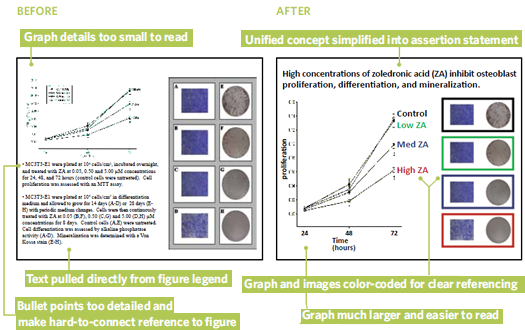
Kosslyn calls the principle that audience members have limited capacities for the retention of information the “Goldilocks Rule.” Communication is most effective when neither too little nor too much information is presented at any one time, he says. Audience members can only typically handle four “perceptual units” (a word, phrase, or picture) at a time says Kossyln. For example, an assertion sentence (1 unit) followed by two images and one phrase (four units total) is easier for an audience to grasp and retain than a slide filled with bullet points.

Signpost changes in information
Audiences key in on perceptual differences, so when introducing a conceptual jump, signal the move with a significant shift in the accompanying imagery. Things like images appearing or arrows directing the audience’s attention to a specific part of a curve can greater emphasize the transition to a new idea. But don’t overdo it. If a visual jump, such as changing background color or font size, is made without a corresponding shift in the information, you risk confusing your audience, Kosslyn notes.

Methods Slide

Modified from K. Aspmo et al., “Atmospheric Mercury Depletion events in polar regions during arctic spring,” presentation (Oslo, Norway Univ of Oslo, 16 June 2004

Results Slide

Image and data courtesy of Genevieve Brown, The Osteobiology Research group, The Pennsylvania State University.
TIPS ON MAKING PRESENTATIONS

Unplug, think, and write
According to Galloway, using PowerPoint to make a great presentation starts with powering down the laptops and writing out an outline on index cards or a legal pad. “People have to shut off their computer and go away as they’re writing their PowerPoint presentation,” he says.

Establish your assertion
Alley says that he starts planning each slide by writing down a single sentence stating the idea he wants the audience to take away. “You have defined what it is you need to support that statement,” he says. “That’s where it starts.” Alley adds that the sentence should only take one or two lines, should consist of only 8–14 words, and should appear in 28-point font when inserted in the final PowerPoint presentation.

Assemble the visual evidence
Let the assertion sentence for each slide guide your decision as to which visuals should accompany it. Use “explanatory images”—not decorative or descriptive images—to support each assertion, says Joanna Garner, assistant professor of psychology at Pennsylvania State University. When describing the context or methods of your research, photos and movies are ideal pieces of evidence; when presenting your results, elements like graphs, tables, or charts (appropriately highlighted to emphasize key points) will do the trick.

Challenge the defaults
When you actually open up PowerPoint, forget about the program’s suggested defaults. Start with a blank slide, say Alley and Galloway. That way, you can insert your assertion sentence at the top of the slide and pull in appropriate images free from the constraints of the program’s preset inclination towards bullet points and subheadings.

BEYOND POWERPOINT

The next generation of presentation software packages is here, making it easy to get input on your slides from your collaborators without sending huge files. RocketSlide, ClearSlide, Google Documents, and Prezi, are just a few of the new online tools that let you design, work on, store, and access your presentation online. Most provide the capability for multiple users to view a presentation at the same time in a Web-conference setting and offer a free trial with options to pay relatively reasonable monthly fees for continued use.

ADDITIONAL RESOURCES

• The Craft of Scientific Presentations: Critical Steps to Succeed and Critical Errors to Avoid, by Michael Alley, Springer-Verlag, Berlin, 2003. $39.95.

• Presentation Zen Design: Simple Design Principles and Techniques to Enhance Your Presentations, by Garr Reynolds, New Riders Publishing, 2010. $31.49.

• slide:ology, by Nancy Duarte, O’Reilly Media, Sebastopol, Calif., 2008. $34.99.

• The Visual Display of Quantitative Information, by Edward Tufte, Graphics Press, Cheshire, Conn., 1983. $40.00.


http://www.youtube.com/watch?v=d04w4vvByDI

terça-feira, 16 de março de 2010

Sessão Científica desta quinta 18 de Março


Nesta quinta a discussão cientifica do LASP abordará o papel dos lipideos da parede do M.tuberculosis na patogenese e diagnóstico da tuberculose.

A discussão e apresentação será conduzida por ELISABETE LOPO estudante de mestrado

segunda-feira, 15 de março de 2010

Vacina para HIV- Nature 11 de Março


Wayne C. Koff1

Abstract
Translational-research programmes supported by flexible, long-term, large-scale grants are needed to turn advances in basic science into successful vaccines to halt the AIDS epidemic, says Wayne C. Koff.
The world needs a vaccine as soon as possible to help halt the inexorable spread of HIV. But
vaccine development has not kept pace with breakthroughs in basic science. However, during the past year, advances in vaccine research and development (R&D) have generated great excitement. These include the first, partial protection in humans by an HIV vaccine1; identification of a new target for broadly neutralizing antibodies on HIV's surface2; and evidence for significant vaccine-induced control of simian immunodeficiency virus (SIV) in non-human primates3.
New leads for vaccine discovery should come from linking HIV vaccine research with the broader field of viral immunology, and understanding the early events in HIV pathogenesis — as recommended elsewhere in this issue of Nature4, 5. Translational-research programmes need to be expanded to connect this basic science with existing vaccine-development tools, including hypothesis-driven clinical trials to assess novel immunogen designs. This will probably require solutions to two problems that have remained unsolved for more than 20 years: the design of immunogens to elicit broadly neutralizing antibodies to prevent HIV infection, and the design of immunogens to elicit robust cellular immune responses to control HIV infection.
Most importantly, the field should launch flexible, large-scale, long-term funding mechanisms ideally by the beginning of 2011 that invest in multidisciplinary teams rather than in projects. Such mechanisms would foster greater innovation and shorten the timeline to a safe and effective HIV vaccine (fig. 1).
Figure 1: 2008 Report on the global AIDs epidemic (UNAIDS, 2008)High resolution image and legend (80K)
The neutralizing-antibody problem
Licensed viral vaccines protect against disease by priming the immune system before pathogen exposure. This generates antibody responses that can prevent infection, and cellular responses that target and eliminate virus-infected cells. Virus-specific neutralizing antibodies bind to proteins on the surface of viral particles and stop them from infecting host cells. Neutralizing antibodies can also bring about the destruction of virus-infected cells, via cellular effector mechanisms. Where natural virus infection elicits robust neutralizing-antibody responses, vaccines have been developed by using attenuated versions of the live virus (such as for measles, mumps and rubella); inactivation (for polio); and virus surface protein subunits or virus-like particles (for hepatitis B and human papilloma virus).
There are, however, three formidable obstacles for vaccine developers attempting to raise HIV-specific neutralizing antibodies. First, the virus is hypervariable so a vaccine must elicit broadly neutralizing antibodies to counter myriad circulating isolates of HIV. Second, the target for broadly neutralizing antibodies, the envelope spike, is very unstable and so is difficult to recreate in a form that can act as a vaccine6. Lastly, most highly conserved targets for HIV-neutralizing antibodies are hard to access on the virus spikes7. However, broad and potent neutralizing antibodies against HIV have been identified from HIV-infected subjects8, demonstrating the feasibility of inducing such antibodies. Unfortunately, experimental attempts to elicit such antibodies have to date universally failed.
Recent technological advances — in structural biology, cryoelectron tomography, computational biology, B-cell immunobiology, and high-throughput robotic micro-neutralization screening assays — have been brought together to try to 'reverse engineer' a solution to this problem9. These studies may inform the rational design of vaccines against other highly variable viruses such as influenza and hepatitis C. This approach identifies infected subjects with broadly neutralizing serum antibody responses, isolates the corresponding broadly neutralizing monoclonal antibodies (bnMAbs), characterizes the interaction of these bnMAbs with the virus envelope, and then engineers immunogens based on this information.
However, in an era of global economic uncertainty, the multidisciplinary centres and consortia likely to be required to adequately address this problem are currently too few and in jeopardy of not achieving critical mass or long-term commitment. This is due in large part to increasingly restrictive funding mechanisms such as milestone based, short-term, project-specific funding.
The cellular immune-response problem
Several lines of evidence, from human HIV natural history and simian immunodeficiency virus (SIV) studies, suggest that cell-mediated immune responses are required to control HIV by keeping the viral load very low or undetectable. Because control of infection is required to prevent disease, and as the best licensed vaccines against other pathogens do not necessarily completely prevent infection, a successful HIV vaccine will probably also need to elicit cell-mediated immune (CMI) responses capable of controlling HIV infection. This is difficult because the virus becomes persistently established in host-cell reservoirs within days of exposure, allowing only a small window of opportunity for CMI-based control.
Three HIV vaccine concepts have now advanced through efficacy trials and none controlled HIV infection as measured by viral load in the blood. In contrast, a small subset of HIV-infected people can control HIV infection to nearly undetectable levels without antiretroviral therapy10, and some SIV vaccines can control pathogenic SIV infections to similarly low viral loads11. To solve this problem, three key issues need to be addressed. First, elucidating the mechanisms of CMI-based control of HIV infection in humans and of SIV in SIV-immunized monkeys would provide important leads. Second, improving functional assays of CMI responses would enhance preclinical and clinical prioritization of candidate vaccines. Third, researchers need to design and screen immunogens capable of outwitting HIV's ability to mutate rapidly and evade CMI responses.
Again, such complex challenges require multidisciplinary teams, and a different approach to funding translational research.
Enhancing translational research
Total global investment for HIV vaccine R&D for 2008 was US$868 million (see chart), a 10% decrease from 2007 (ref. 12). However, only 5–10% was focused directly on trying to solve the two major vaccine-design problems detailed above. Moreover, funding for translational research has generally been limited to 3–5 year programmes that primarily support small academic consortia, and lack many of the industrial-style disciplines needed for vaccine discovery and development. Collectively, such projects have a very low probability of success. In addition, academic scientists must split their time between research, getting grants, teaching and fulfilling administrative and managerial responsibilities, limiting their time focused on the scientific problems.

ADAPTED FROM REF. 12
The funding mechanisms from national public-sector research agencies have been effective in fostering basic research, primarily through investigator-initiated programmes. These should continue. However, these mechanisms are not optimal for attracting new talent to HIV vaccine research, fostering innovation in vaccine discovery, establishing links with industry or providing long-term multidisciplinary commitment. It is unfortunate then that philanthropic foundations and other donors aiming to fill the translational science gap have increasingly tilted towards the public-sector model.
There are examples of successful integration of basic and translational research practices that should be learned from and expanded on. These include the Neutralizing Antibody Consortium (NAC) set up by the International AIDS Vaccine Initiative (IAVI); the US National Institute of Allergy and Infectious Diseases (NIAID) intramural Vaccine Research Center; and the recently established Ragon Institute in Boston, Massachusetts. Teams associated with these three institutions have been responsible for many of the most promising recent advances2, 7, 10, 13, 14, 15.
These institutions have established practices that emphasize long-term (eight years or more) institutional commitment. They reward proven scientific leadership and track records rather than project-specific proposals; they try to link researchers with those from outside HIV vaccine R&D; and they limit major project reporting and reviews of laboratories to multi-year cycles, increasing time for HIV vaccine design.
Building on these successes, three new translational-research funding mechanisms should be instituted.
Young investigator awards should be set up by major stakeholders of the Global HIV Vaccine Enterprise (http://www.hivvaccineenterprise.org/) for scientists under age 35. These awards would attract the best new scientists to the challenges of HIV vaccine R&D by offering 5–7 years of salary and flexible funding. Investigators would be free, within broadly defined research programmes, to redirect their funds as new data emerge, in exchange for expending at least 75% of their effort on the two major scientific problems noted above. Developing such grants will require stakeholders, including public-sector research agencies and non-profit foundations to invest in young scientists as components of multidisciplinary teams, rather than relying on traditional investments in specific projects.
Incentives for expanded biopharmaceutical investment need to be set up. Vaccines are made in industry, yet industrial involvement in HIV vaccine R&D is minimal because of the scientific challenges, market disincentives and opportunity costs. Support for industrial investment — from the Bill & Melinda Gates Foundation and IAVI — to Theraclone Sciences in Seattle, Washington, and Monogram Biosciences in San Francisco, California, led to the application of B-cell screening and micro-neutralization technologies central to the recent identification of a new target on HIV for broadly neutralizing antibodies2. Additional mechanisms to enhance biopharmaceutical investment, particularly in process development for vaccines, could include advanced market commitments, intellectual-property incentives, and direct public-sector support for vaccine R&D.
Translational-research teams must be established. The Howard Hughes Medical Institute (HHMI) successfully supports internationally recognized basic-research scientists with a salary plus a portion of laboratory costs for a minimum of five years, without restriction on their research direction. This attracts talented scientists and fosters innovation. Few HHMI-like mechanisms exist for teams focused on HIV vaccine translational research. Ten per cent of the annual investment in HIV vaccine R&D should be refocused to provide such a mechanism for HIV vaccine development.
In sum, major funders will bring a successful HIV vaccine closer by establishing long-term translational-research programmes, attracting scientific talent and technologies, providing greater incentives for industry participation and focusing on rational vaccine design. These initiatives should be formulated over the coming months, debated at the international AIDS Vaccine 2010 conference starting on 28 September in Atlanta, Georgia, and implemented by the beginning of next year. This effort will also provide a framework for the rational design of vaccines against other global infectious diseases.
See Review, page 217, and Perspectives, page 224.
Top of page
References
Rerks-Ngarm, S. et al. N. Engl. J. Med. 361, 2209–2220 (2009). Article PubMed ChemPort
Walker, L. M. et al. Science 326, 285–289 (2009). Article PubMed ChemPort
Hansen, S. G. et al. Nature Med. 15, 293–299 (2009). Article
Virgin, H. W. & Walker, B. D. Nature 464, 224–231 (2010). Article
Haase, A. T. Nature 464, 217–223 (2010). Article
Pancera, M. et al. Proc. Natl Acad. Sci. USA 107, 1166–1171 (2010). Article PubMed
Chen, L. et al. Science 326, 1123–1127 (2009). Article PubMed ChemPort
Stamatatos, L., Morris, L., Burton, D. R. & Mascola, J. R. Nature Med. 15, 866–870 (2009). Article
Burton, D. R. et al. Nature Immunol. 5, 233–236 (2004). Article
Miura, T. et al. J. Virol. 83, 3407–3412 (2009). Article PubMed ChemPort
Koff, W. C. et al. Nature Immunol. 7, 19–23 (2006). Article
HIV Vaccines and Microbicides Resource Tracking Working Group Adapting to Realities: Trends in HIV Prevention Research Funding (July 2009); available at http://www.hivresourcetracking.org/.
Simek, M. D. et al. J Virol. 83, 7337–7348 (2009). Article PubMed ChemPort
Hessell, A. J. et al. Nature Med. 15, 951–954 (2009). Article
Košmrlj, A. et al. Nature (in the press).
Top of page
Wayne C. Koff is senior vice-president of research and development, and chief scientific officer at the International AIDS Vaccine Initiative, 110 William Street, 27th Floor, New York, New York 10038, USA. Email: wkoff@iavi.org
Top of page

quinta-feira, 11 de março de 2010

Comparative genomic hybridization analysis Blood 97, 3875, 2001


Nesta quinta a sessão científica discutirá artigo sobre uma análise comparativa do genoma entre leucemia e linfoma associada ao HTLV.
Veja que na figura de sobrevida (1 a E) e a perda de cromossomos.
As fig a D tem um esquema da patogenese e a E em baixo tem a imagem de célula em flor (flower cell) característica de uma leucemia T.
Artigo a ser discutido foi publicado na Blood 97, 12 3875, 2001